Posts

Researchers create high-performance artificial neurons for advanced perception systems

Image
  Artificially engineered biological processes, such as perception systems, remain an elusive target for organic electronics experts due to the reliance of human senses on an adaptive network of sensory neurons, which communicate by firing in response to environmental stimuli. A new collaboration between Northwestern University and Georgia Tech has unlocked new potential for the field by creating a novel high-performance organic electrochemical neuron that responds within the frequency range of human neurons. They also built a complete perception system by designing other organic materials and integrating their engineered neurons with artificial touch receptors and synapses, which enabled real-time tactile signal sensing and processing. The research, described in a paper published this month in the journal Proceedings of the National Academy of Sciences (PNAS), could move the needle on intelligent robots and other systems currently stymied by sensing systems that are less power...

Qunova's HiVQE Algorithm Achieves Chemical Accuracy on NISQ Machines

Image
Qunova Computing, a leading developer of quantum software applications for the chemical, pharmaceutical , and industrial engineering sectors, has announced groundbreaking results from a series of tests conducted on three distinct NISQ-era quantum computers, each with varying qubit counts. In each trial, Qunova’s algorithm successfully delivered results with an accuracy below the 1.6 millihartree threshold, a benchmark known as ‘chemical accuracy,’ essential for real-world quantum chemistry applications. This achievement marks the first time such accuracy has been attained on commercially available quantum devices. At the Quantum Korea 2024 event, Qunova Computing demonstrated chemical accuracy using a 20-qubit IQM machine. Over three consecutive days, Qunova successfully produced energy estimations for three different geometries of lithium sulfide (Li2S), each demonstration lasting an hour and performed live at the event. Prior to this, Qunova had showcased its algorithm's abilit...

Removing Fossil Fuels for Renewable Hydrogen Production

Image
  The majority of developed nations have reported clean energy policies to decrease their CO2 emissions, with the aim of reaching “net zero” within the next few decades. Fossil fuel usage should be progressively stopped if this goal is to be accomplished, with alternative energy sources compensating for the unavoidable deficit. Infrastructure must support whatever energy source comes out on top to create and move the large amounts of fuel required to sustain society’s constantly increasing dependence on electrified technologies. Hydrogen is a favorable substitute for oil and gas. With the European Commission featuring it profoundly in Europe’s path to decarbonization, hydrogen- based technologies are set to experience speedy development in the next 10 years. Greener Hydrogen Hydrogen has immense prospects as a green energy source, but its eco-friendliness relies completely on the amount of carbon emitted during its production. The huge majority of worldwide hydrogen manufacture i...

Exploring the interaction between cell death and cellular senescence in cancer

Image
  Aging cells secrete substances known to promote the growth of cancer cells. The development of drugs that can selectively kill these cells or inhibit the secretion of substances is ongoing. The latest findings on the interaction between cell death and cellular senescence in cancer and their pathophysiological significance have been reviewed by a team from Osaka Metropolitan University's Graduate School of Medicine and Harvard Medical School. Lecturer Kouhei Shimizu and Professor Fuminori Tokunaga of OMU and Dr. Hiroyuki Inuzuka of Harvard Medical School outlined the molecular mechanisms of various types of cell death and the changes in their regulatory factors that occur with age. Since senescent cells often have resistance to apoptosis, the best characterized programmed cell death, the removal of this resistance has been a major goal of senescent cell removal therapy. On the other hand, it is not yet known how the relatively new types of inflammatory programmed cell death, suc...

Nanoscale sensor detects lung cancer through breath chemistry

Image
  Exhaled breath contains chemical clues to what's going on inside the body, including diseases like lung cancer. And devising ways to sense these compounds could help doctors provide early diagnoses - and improve patients' prospects. In a study in ACS Sensors, researchers report developing ultrasensitive, nanoscale sensors that in small-scale tests distinguished a key change in the chemistry of the breath of people with lung cancer. November is Lung Cancer Awareness Month. People breathe out many gases, such as water vapor and carbon dioxide , as well as other airborne compounds. Researchers have determined that declines in one exhaled chemical - isoprene - can indicate the presence of lung cancer. However, to detect such small shifts, a sensor would need to be highly sensitive, capable of detecting isoprene levels in the parts-per-billion (ppb) range. It would also need to differentiate isoprene from other volatile chemicals and withstand breath's natural humidity. Pre...

New research shines light on position-specific hallmarks of cancer

Image
  A team led by the Cancer Immunogenomics group at the Josep Carreras Leukaemia Research Institute, the Computational Biology group at the Barcelona Supercomputing Center and the Germans Trias i Pujol Research Institute shows, for the first time, that within a tumor, the expression of the different hallmarks of cancer is not cell-specific, but rather position-specific. Under this new light, tumour architecture emerges as a valuable source of information to understand tumor dynamics and predict its sensitivity to anticancer drugs. "What is a tumor?" This is the fundamental question to answer if we want to treat cancer effectively. Our vision of cancer and tumors has been evolving with time, from the simplistic bunch of all-similar malignant cells to a more sophisticated, heterogeneous and hierarchical cellular structure, composed of many different cell types. Recently, a new paradigm has emerged: the hallmarks of cancer. The hallmarks of cancer are features that, when unlock...

"New Breakthrough in Acid Reflux Treatment: Scientists Develop Revolutionary Drug"

Image
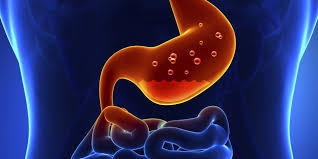
  Recent advancements in acid reflux treatment have introduced promising options for patients seeking relief from gastroesophageal reflux disease (GERD). FDA Approval of Voquezna (Vonoprazan): In July 2024, the U.S. Food and Drug Administration approved Voquezna (vonoprazan) for treating heartburn associated with non-erosive GERD in adults. Voquezna is a potassium-competitive acid blocker (PCAB) that reduces stomach acid production. Clinical trials demonstrated that patients taking Voquezna experienced a higher percentage of heartburn-free days compared to those on a placebo. Common side effects include abdominal pain , constipation, diarrhea, nausea, and urinary tract infections. Introduction of RefluxStop™ Procedure: In November 2023, the UK's National Health Service (NHS) performed its first RefluxStop™ procedures at Imperial College Healthcare NHS Trust. Developed by Implantica, RefluxStop™ is a minimally invasive surgical implant designed to prevent acid reflux by restoring th...